Soft Lines, Fast Money: How to Find Mispriced Prop Bets Before Vegas Adjusts
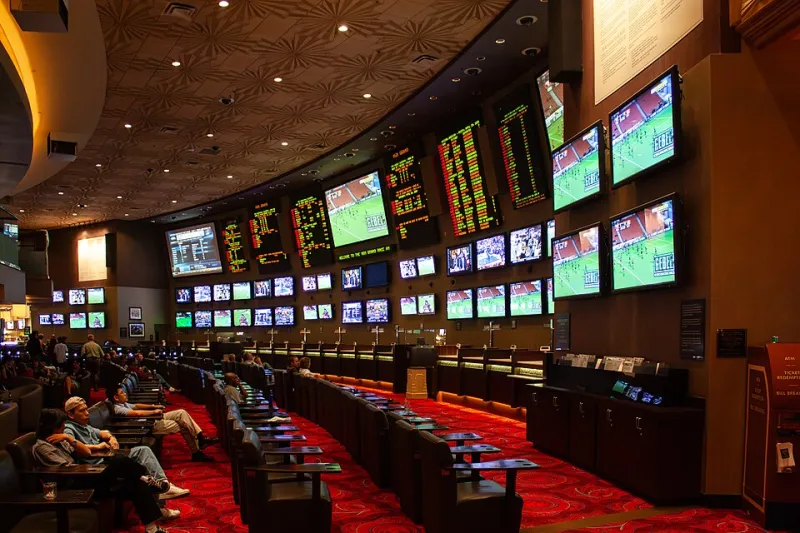
Photo: Chad Davis, CC BY 2.0, via Wikimedia Commons
Anybody who's spent serious time at a sportsbook knows the big markets are brutal. Point spreads on NFL games, NBA totals, major league moneylines — those get hammered by sharp money within minutes of posting. The books have entire teams and algorithmic systems dedicated to keeping those lines tight. Trying to beat them there as a casual bettor is like showing up to a knife fight with a spoon.
But prop bets? That's a different world.
Prop betting — wagering on specific outcomes within a game rather than the game's result — is one of the most asymmetric opportunities in sports wagering right now. The books are slower there. The lines stay soft longer. And if you build the right framework for spotting value, you can capitalize before the sharp money arrives and forces a correction.
This is the kind of edge HR99 NhaCai wants you playing. Not luck. Informed positioning.
Why Books Are Slower on Props
Understanding the opportunity starts with understanding why it exists. Sportsbooks allocate their analytical resources based on betting volume. A Sunday NFL game might attract hundreds of thousands of dollars in action on the spread alone — so that line gets constant attention, real-time adjustment, and sharp review.
A prop bet on whether a wide receiver goes over or under 64.5 receiving yards? That gets a fraction of the scrutiny. The book sets the line using historical averages, maybe some basic matchup data, and moves on. The market for that prop is thinner, the internal modeling is less sophisticated, and the line often sits untouched for longer — sometimes until kickoff.
That lag is your window.
The Categories Where Books Consistently Underestimate
Not all prop categories are equally soft. Some have gotten sharper over time as the market has matured. Others remain reliably mispriced because of structural reasons books haven't fully addressed.
Player performance props in low-profile matchups. Books put real effort into modeling quarterbacks and star running backs for prime-time games. A third-string tight end in a divisional matchup between two 4-8 teams? The modeling is thinner. Historical data patterns on that player's usage rates in specific defensive schemes can reveal significant edges that the opening line doesn't reflect.
First-half and first-quarter props. Game totals for full games get sharp attention. Segment props — first-half scoring, first-quarter leader, etc. — are priced with less precision. Teams have documented tendencies around how fast they start, how often they lead at halftime, and how those patterns shift against specific opponent types. Books don't always price these nuances accurately.
Niche sport props. The further you get from NFL, NBA, and MLB, the softer the book's modeling gets. College football props, international soccer player stats, NHL shot totals — these markets often carry significantly more value because the books simply don't invest the same analytical horsepower.
Award and novelty props. MVP odds, season-long award markets, and novelty bets (first team to score, method of first score) are frequently priced on reputation and public perception rather than rigorous statistical modeling. A book will set an MVP line heavily influenced by media narratives — which creates opportunities when the underlying data tells a different story.
Building Your Prop Evaluation Framework
Random prop betting isn't a strategy — it's just gambling with extra steps. The edge comes from systematic evaluation. Here's a starting framework.
Step 1: Establish your own baseline. Before you look at the book's line, build your own projection using historical data. For player props, that means looking at target share, snap count trends, matchup-adjusted stats, and pace of play factors. Sites like Pro Football Reference, Basketball Reference, and various advanced stats aggregators give you the raw material. Your projection is your anchor.
Step 2: Compare to the market. Once you have your number, look at the posted line. If the book has a receiver at 55.5 receiving yards and your projection says 71 yards based on his usage rate against zone coverage — which this week's opponent runs 68% of the time — that's a meaningful gap worth exploring.
Step 3: Check for line movement. A prop that opens and immediately moves suggests sharp money has already found the edge. A line that sits static for 24 to 48 hours is either well-priced or hasn't been found yet. Use line movement as a signal, not the primary decision driver.
Step 4: Assess the juice. Even a well-identified edge gets eaten alive by vig if the juice is steep. Standard -110 on both sides is manageable. Props priced at -130 or worse on one side need a significantly larger edge to justify the bet. Always calculate your break-even percentage (divide the denominator by the sum of both numbers — so -130 means you need to win 56.5% of the time just to break even).
Timing Is Everything
Prop lines on major games can shift dramatically between opening and kickoff as sharp bettors, injury news, and weather information all filter into the market. The optimal entry point depends on what you know and when.
If your edge is based on a matchup analysis or historical pattern that's publicly available, others may find it too — so early entry makes sense. If your edge depends on late-breaking information like a key starter being questionable, you want to wait until the last responsible moment before the market fully adjusts.
Some bettors make a habit of setting line alerts and watching for movement in prop markets during the 24 hours before kickoff. Sudden movement on a player prop often signals that sharp money has spotted something. You can either join the move or fade it — but either way, the movement itself is information.
The Discipline That Makes It Work
Prop betting's biggest danger is also its biggest appeal: there are a lot of bets available. On a full NFL Sunday, you might have access to hundreds of player props across a dozen games. The volume creates opportunity — but it also creates the temptation to bet too many things without real edges on all of them.
The bettors who actually profit from props long-term are selective. They might identify two or three strong positions across an entire weekend rather than scattering action across twenty props. Quality over quantity isn't just a cliché here — it's the actual mechanism of sustainable profit.
Bet bold where the math says to. Sit out everywhere else. That's how you play the prop game the right way.