The Gaps the Books Miss: Finding Real Value in Overlooked Betting Markets
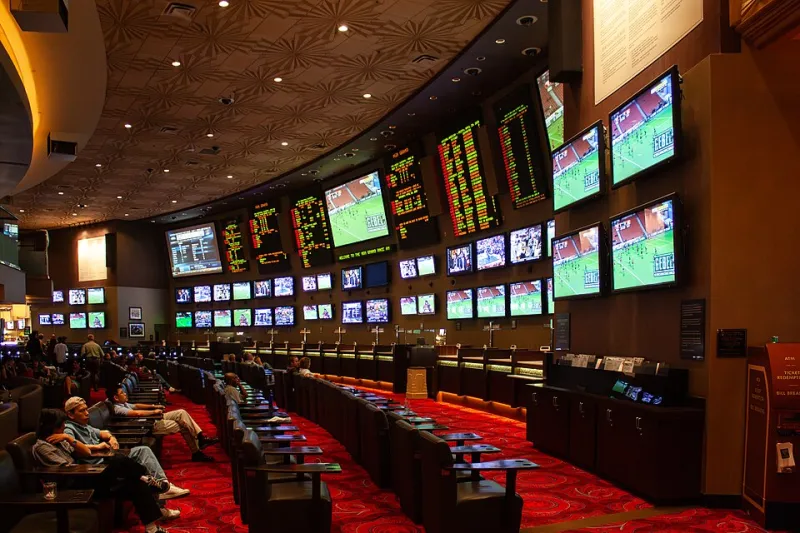
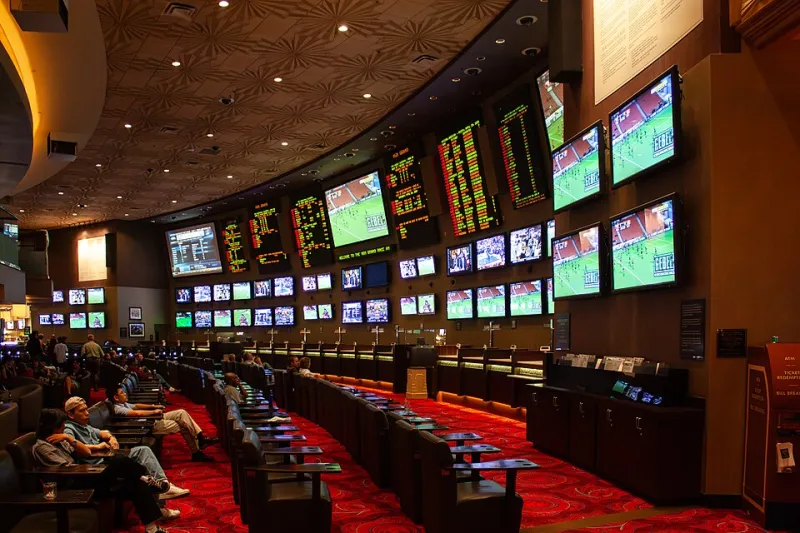
Photo: Chad Davis, CC BY 2.0, via Wikimedia Commons
If you've spent any time digging into sports betting beyond the Sunday NFL slate, you've probably noticed something: the lines on marquee games are almost always tight. The books have armies of analysts, automated pricing engines, and decades of sharp action baking efficiency into every spread on a Cowboys or Lakers game. Beating those markets consistently is genuinely hard.
But not every market gets that treatment. And the gaps the books leave open — whether by design or resource allocation — are where patient, informed bettors can find real, exploitable value. At HR99 NhaCai, we're about betting bold and playing smart, and nothing embodies that combination better than learning to identify market inefficiencies before the crowd catches on.
Why Inefficiencies Exist in the First Place
Sportsbooks aren't trying to predict outcomes. They're trying to balance their liability and collect the vig. On high-volume markets, sharp action and massive recreational betting pressure combine to push lines toward accurate probabilities pretty quickly.
But on low-volume markets — niche leagues, obscure props, live alternate lines — the books are running thinner. Less sharp action means slower adjustments. Less public interest means the line is sometimes set by a single oddsmaker working with limited data rather than a team of analysts cross-referencing injury reports, weather, and historical splits.
That's your opening.
Live Alternate Totals: Speed Is the Edge
Live betting is one of the most dynamic environments in the modern sportsbook, and alternate totals are among the most underappreciated tools in a sharp bettor's kit. Here's why: when a game's pace changes suddenly — a scoring run in basketball, back-to-back drives in football — the live line often lags the true probability shift by 15 to 45 seconds while the algorithm recalibrates.
In that window, the posted alternate total might still reflect pre-shift assumptions. A live NBA game where one team has just gone on a 12-2 run might still offer an under on a total that was set before the momentum flipped. Bettors who are watching the game closely and understand pace metrics can exploit that lag.
The key is preparation. Know the pace stats for the teams involved before the game starts. Understand their fourth-quarter tendencies. When you see a live alternate line that doesn't reflect what you're watching in real time, that's not luck — that's an information gap you can monetize.
Injury Adjustment Lags: The 30-Minute Window
This is one of the most consistently exploitable inefficiencies in mainstream betting markets, and it's been around for years. When a key player is ruled out — or unexpectedly returns from an injury — sportsbooks don't always adjust all their lines simultaneously.
The main spread and total typically move fast. But player props, team totals, and alternate spreads sometimes lag. In the NFL, a starting quarterback's late scratch might hit the injury report wire at 11:45 AM Eastern on a Sunday. The main spread adjusts within minutes. But the backup QB's passing yards prop? That might sit stale for another 20–30 minutes while the book manually reviews and reprices.
For US bettors, this means building a routine around injury report timing. The NFL's official report drops at set windows — Wednesday through Friday practice participation, and then the final report Saturday. Track those windows. Have accounts at multiple books open and ready. When news breaks, move fast on the markets that are slowest to adjust.
The same dynamic plays out in the NBA with load management, in MLB with late lineup swaps, and in college football when depth chart information leaks before the official designation.
Low-Volume Leagues: The Algorithm's Blind Spot
Major sportsbooks now offer lines on everything from Swedish Allsvenskan soccer to Australian rules football to Taiwanese baseball. And while they price those markets, they don't price them with the same rigor as the NFL or NBA.
In low-volume leagues, the books are often relying on automated pricing pulled from exchange data or a single third-party feed. If that feed is slightly stale, or if there's meaningful local information that hasn't been incorporated — a key midfielder playing through a knock, a home team with a travel disadvantage after a midweek cup match — the line might be meaningfully off.
Bettors who specialize in one or two of these niche leagues and develop genuine expertise often find consistent edges that simply don't exist in the saturated NFL market. It's not glamorous. You're not betting on the Super Bowl. But you're also not fighting the most sophisticated pricing infrastructure in the world.
The tradeoff is volume limits. Books are quick to restrict or limit sharp action on niche markets. If you're winning consistently on obscure leagues, expect your max bet to shrink over time. Manage your accounts accordingly and spread your action across multiple platforms.
The Recreational Bettor Effect
Casual bettors — the weekend warriors who throw a few dollars on their favorite team — tend to cluster around popular markets. They bet the big games, the star players, the over. This creates a systematic bias in public-facing lines: popular teams get slightly worse odds, overs get slightly inflated, and anything without a celebrity storyline gets priced more cleanly.
Sharp bettors have known this for decades. Fading public bias on prime-time games, betting unders in high-profile matchups, and taking unpopular sides in divisional rivalries are all strategies built on this principle. The edge isn't enormous, but it's consistent — and consistency compounds.
The modern version of this insight extends to props. Recreational bettors love anytime touchdown scorer props, passing yard totals for star QBs, and points props for NBA superstars. Those markets are heavily bet and often shaded toward the popular player. Meanwhile, blocking props, defensive stats, and team-level situational props attract almost no casual action — and sometimes get priced sloppily as a result.
Staying Ahead of the Algorithms
The uncomfortable truth is that every market inefficiency has a shelf life. As more sharp money flows into a niche, as more data becomes available, as books invest in better pricing models, the edges compress. What worked reliably three years ago in live alternate totals might be significantly tighter today.
The solution isn't to give up on finding edges — it's to stay curious, stay specific, and stay ahead of the crowd. The bettors who win long-term aren't the ones who found one great system. They're the ones who keep hunting, keep adjusting, and keep asking where the next gap is.
At HR99 NhaCai, that's exactly the mindset we're here to support. Bet bold means taking calculated risks on markets others overlook. Play smart means understanding why those markets are mispriced before you put money on them.