The Invisible Tax on Your Poker Game: What the House Takes Before You Even See a Flop
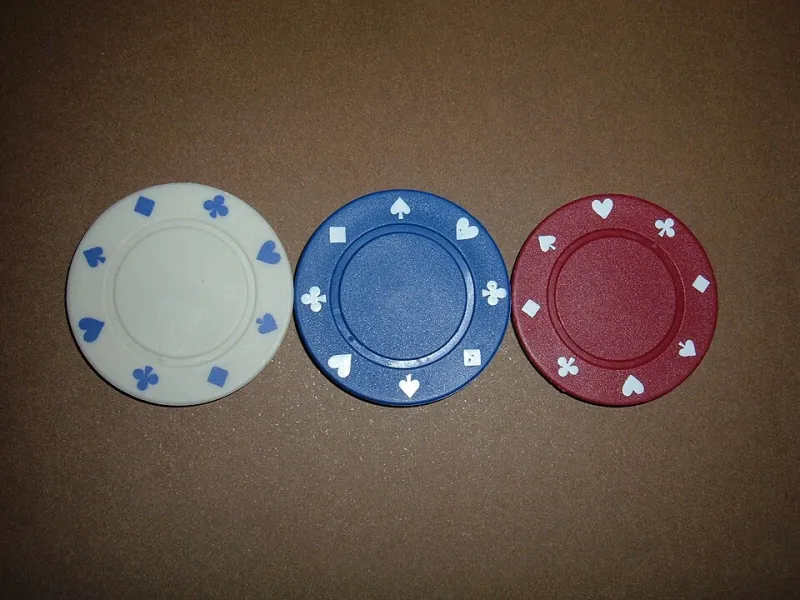
Photo: BrokenSphere, CC BY-SA 3.0, via Wikimedia Commons
Let's be honest. Most people who sit down at a poker table think the game is them versus the other players. And yeah, that's true — sort of. But there's a silent third party pulling chips out of every pot, every hour, every session, whether you win or lose. That's the house. And until you really understand what it's costing you, you're basically playing with a leak you can't see.
At HR99 NhaCai, we're big believers in playing smart before betting bold. That means getting comfortable with the math that actually governs your results — starting with rake.
So What Exactly Is Rake?
Rake is the cut the casino or poker room takes from each hand as its fee for hosting the game. In most live US card rooms, that's somewhere between 5% and 10% of the pot, usually capped at $5 to $7 per hand. Online, the structure varies — many sites take 4% to 5% with caps ranging from $1 to $3 depending on the stakes.
There's also the "time charge" model, common in higher-stakes games, where the house charges a flat fee per half-hour or hour regardless of pot size. And if you're playing tournaments, you're paying juice — that's the entry fee surcharge, typically expressed as something like $100+$10, where the $10 goes straight to the house.
None of this is hidden, exactly. But it's structured to feel invisible, and that's where the trap is.
The Break-Even Math Nobody Talks About
Here's where things get real. If a poker room takes 5% rake capped at $5, and the average pot at your table is around $60, the house is pulling roughly $3 per hand. At a typical live game running 25 to 30 hands per hour, that's somewhere between $75 and $90 per hour being extracted from the table collectively.
Spread that across six players, and each seat is effectively paying around $12 to $15 per hour just to be in the game — before a single bad beat or cooler enters the picture.
To break even in that environment, you don't just need to play better than average. You need to be good enough to overcome your share of the rake plus beat the players around you. Analysts who study win rates closely suggest that in a raked live game, a player needs to be winning at roughly 3 to 5 big blinds per 100 hands just to net a modest profit after fees. That's not a casual achievement. That's a skill threshold a lot of recreational players never actually reach.
Online it's even tighter. With faster deal speeds (sometimes 60 to 80 hands per hour), the rake clock spins faster too. The total extraction rate per hour can be higher online than live, even with lower per-hand caps.
Tournament Juice: Where It Gets Sneaky
Casual tournament players often look at a $200 buy-in event and think they're risking $200. But if the structure is $200+$30, you're actually paying a 15% juice on top of your buy-in. That's steep. Compare that to some player-friendly events running $200+$20 (10%) or even $200+$15 (7.5%), and the difference in your long-run ROI is massive.
Sharp tournament players treat juice percentage as a filter. Anything north of 12% to 15% gets scrutinized. Anything above 20% — which you do see at smaller regional casinos and some charity events — is often not worth entering unless the field is exceptionally soft.
Predatory Venues vs. Player-Friendly Rooms
Not all rake structures are created equal, and the spread across US card rooms is wider than most people realize.
In general, larger poker rooms in major markets — Las Vegas, Los Angeles, Chicago — tend to be more competitive with their rake because they're fighting for volume. Places like the Bicycle Casino in LA or Aria in Vegas have reputations to protect and player bases sophisticated enough to notice gouging.
Smaller regional rooms, particularly in states where poker is more limited and players have fewer alternatives, sometimes push rake to the legal or ethical edge. A 10% rake with a $6 cap at low-stakes games is not uncommon in these spots, and the player pool isn't always aware enough to push back.
Online platforms vary wildly. Some offshore-facing sites that accept US players run aggressive rake schedules with minimal rakeback programs. Others are transparent and offer meaningful loyalty rewards that effectively reduce your net rake to 2% to 3%. Before you commit to any platform, look for the rake schedule — it should be publicly posted. If it isn't, that's a red flag.
Rakeback and Loyalty Programs: Your Real Edge
One of the most underused tools available to online poker players is rakeback — essentially a rebate system where a percentage of what you pay in rake gets returned to you. Even a 20% rakeback deal can transform a break-even player into a modest winner, purely through volume.
If you're grinding mid-stakes online cash games and playing 50,000+ hands a year, the difference between a room with 25% rakeback and one with none can easily be thousands of dollars annually. Treat rakeback as part of your game selection process, not an afterthought.
Playing the Room, Not Just the Table
The mindset shift that separates recreational players from serious ones is simple: stop thinking of rake as a background detail and start treating it as an opponent with a fixed strategy. The house always takes its cut. Your job is to make sure what's left is still worth your time.
Calculate your hourly rake cost before you sit. Evaluate tournament juice before you register. And if a room's structure doesn't make sense for your win rate, find a better one. The cards are random — the fee structure isn't. Play that part of the game on purpose.