The Silent Drain: How Poker Rake Quietly Eats Your Profits Session by Session

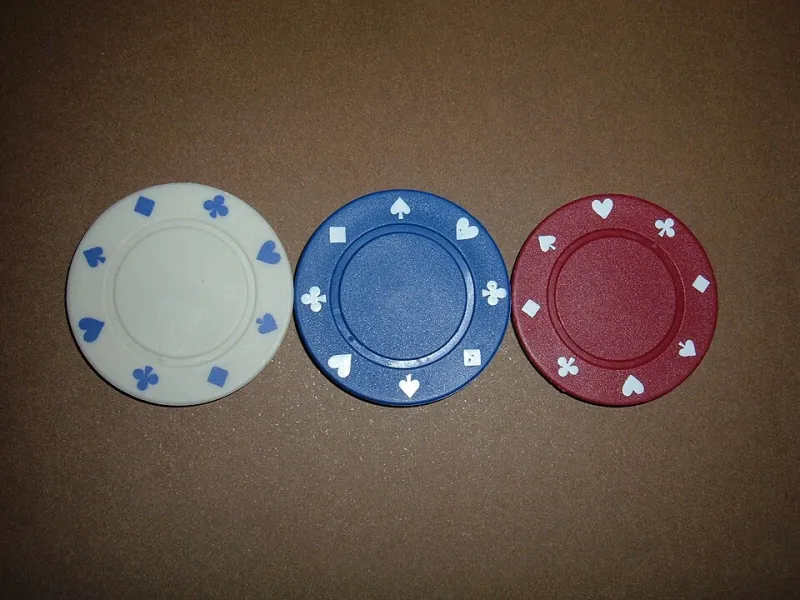
Photo: Jerom Gerard, CC BY 2.0, via Wikimedia Commons
You just crushed a three-hour cash game session. You outplayed two fish, ran your big hands well, and walked away thinking you had a solid win. Then you do the math and realize your actual profit is a fraction of what you expected. No bad beats. No coolers. Just rake — the house's cut that silently follows every pot you win.
At HR99 NhaCai, we're all about playing smart, and playing smart means understanding every edge that works against you before you even see a showdown. Rake is one of the most underestimated costs in poker, and if you're not accounting for it, you might be a winning player on paper who's actually losing money in practice.
What Is Rake, Exactly?
Rake is the fee a poker room charges to run a game. In cash games, it's typically a percentage of each pot — usually between 2.5% and 5% — taken directly before the winner receives their chips. Most rooms cap the rake per hand somewhere between $3 and $5, though online platforms sometimes run lower caps to stay competitive.
Tournaments work differently. Instead of pot-by-pot extraction, the room charges a flat fee built into your buy-in. A $100 tournament listed as "$100+$10" means $100 goes into the prize pool and $10 goes straight to the house. That's a 10% vig before a single card is dealt.
Neither structure is inherently evil — poker rooms need revenue to operate. But the compounding effect over hundreds of hands or dozens of tournament entries is where things get genuinely painful.
The Compounding Problem in Cash Games
Let's run some real numbers. Say you're playing $1/$2 No-Limit Hold'em at a live casino. The room takes 5% up to a $5 cap. You play 30 hands per hour — a fairly standard pace for a live game — and the average pot size is $40.
Rake per hand: $2 (5% of $40). Over a four-hour session: 120 hands × $2 = $240 in rake pulled from the table.
That $240 doesn't come from thin air. It comes from the players. A full nine-handed table shares that burden, so your individual share is roughly $27 per session — but that's only if the rake is distributed evenly, which it isn't. Winners pay more rake because they're winning more pots. The better you run, the more you contribute to the house.
Online poker actually compounds this faster. Automated dealing pushes hand rates to 60–80 per hour, sometimes higher. At those speeds, even a $1 average rake per hand translates to $60–$80 per hour flowing out of the table. For micro-stakes grinders, that's a brutal headwind.
Tournament Rake: The Entry Fee Nobody Talks About
Live poker tournaments at major US casinos — think properties along the Las Vegas Strip or regional stops on the circuit — typically run rake between 10% and 15% of the buy-in. Some smaller regional tournaments push closer to 20%.
Online tournament rake tends to be slightly more competitive. Major platforms have historically offered structures in the 7%–10% range, with occasional rake-free guarantees to attract traffic. But the base rate still matters enormously if you're a volume player.
Here's the math on tournament compounding: if you play 200 tournaments a year at a $100 buy-in with 10% rake, you've paid $2,000 to the house before factoring in your results. To break even, you need to return at least $2,000 in prize money just to cover your entry fees — and that's before you've generated a single dollar of actual profit.
Finding Rake-Favorable Games
Not all games are equally punishing. Knowing where to look for softer rake structures can meaningfully extend your edge.
Cap structure matters more than percentage. A 5% rake with a $3 cap is far friendlier than a 5% rake with a $5 cap at bigger pot sizes. If you're playing $2/$5 or higher, prioritize rooms with lower caps — they preserve more of your winnings per pot.
Look for rakeback programs and loyalty rewards. Several online platforms offer rakeback — essentially returning a percentage of the rake you generate back to your account. A 20%–30% rakeback deal can meaningfully offset the house's cut, especially for high-volume players. Some sites also run milestone bonuses that function similarly.
Shorter-handed games reduce per-player rake burden. At a six-max table, the rake is spread across fewer players, but hand rates typically increase. The net effect depends on the stakes and room, but six-max can sometimes produce better hourly EV for aggressive players who thrive in action-heavy pots.
Avoid tournaments with excessive juice. If a tournament lists its structure as "$50+$15," that's a 30% rake — a number that should send you running. Legitimate competitive events rarely exceed 12%–15%. Anything beyond that is a red flag.
The Player Pool Factor
Rake doesn't exist in isolation. A game with slightly higher rake but significantly weaker competition can still be more profitable than a rake-friendly game full of regulars. The goal isn't to minimize rake in absolute terms — it's to maximize your expected value after rake.
A $1/$2 game at a tourist-heavy casino might run 5% rake with a $5 cap, but if three seats are occupied by recreational players on vacation, your win rate per hour could easily absorb that cost. Meanwhile, a tight $1/$2 game at a local cardroom with a 3% cap and a table full of grinding regulars might net you less despite the friendlier rake structure.
Always evaluate rake relative to the player pool, not in isolation.
Playing Smart Means Knowing the Full Cost
At HR99 NhaCai, we believe the smartest bettors and players are the ones who understand the full picture — including what's being taken before the money hits their stack. Rake is unavoidable, but it's not unmanageable. Track your sessions, compare room structures, chase rakeback where it's available, and factor the house's cut into your win rate calculations.
Because a player who runs great but ignores rake isn't playing smart. They're just playing lucky — and luck has a way of evening out.